
Most humanoid robots launch with a highlight reel. Minerva Humanoids launched with a job description, and a customer. The San Francisco startup came out of stealth this week with roughly $10 million in pre-seed funding led by General Catalyst, with Long Journey Ventures and Credo Ventures as co-leads. Its robot is called Roger, and his job is to go where humans shouldn’t.
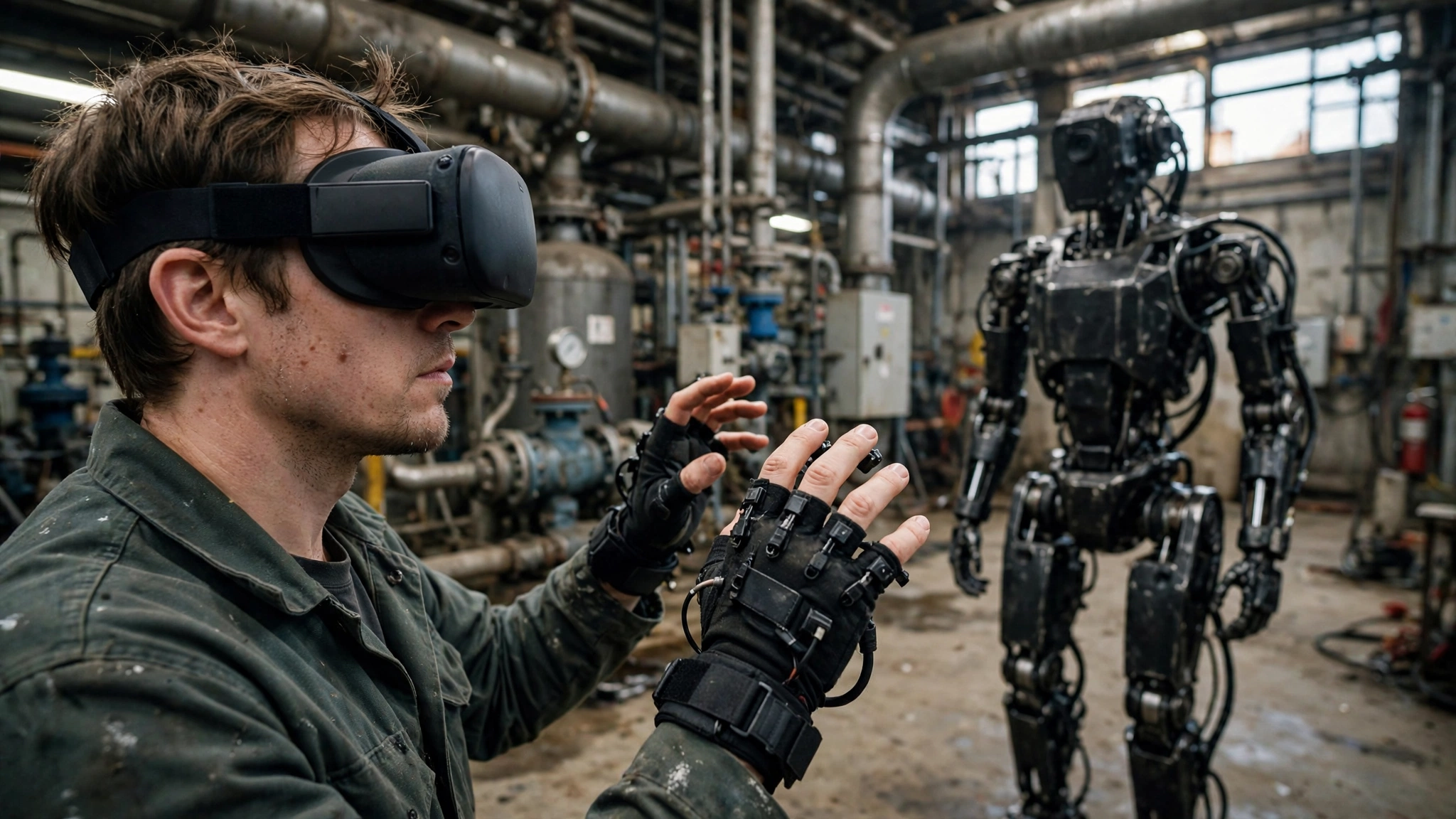
The assignment list is specific and serious: onshore and offshore oil and gas, explosive ordnance disposal, hazmat response. These are places where the hazard is the whole point: toxic air, explosive atmospheres, crushing machinery. Minerva is refreshingly honest about what autonomy can and can’t do today. Roger is semi-autonomous. Trained specialists drive him through a VR headset and force-feedback haptic gloves, staying physically outside the danger zone while the robot works inside it.
That’s a philosophy, not a compromise. Full autonomy in an unpredictable industrial disaster is a fantasy. A skilled human with robot hands in the room, via a robot body in the room, is a product.
Five months from concept to walking
Here’s the number that stopped people: five months. That’s how long Minerva took to go from concept to a walking humanoid. In an industry where development cycles run in years, that’s startling, and it came from a team with the credentials to justify it.
CEO Sandor Felber launched the humanoid research line at MIT’s Computer Science and AI Lab, then worked on Tesla’s Optimus program. CTO Maurice Rahme spent six years at Boston Dynamics, where he was the technical lead on Stretch from prototype to commercial product. These are people who have shipped robots before. The five-month timeline stops reading like hype and starts reading like experience.
The supply chain has its own story. The software and AI were developed in the U.S., the first Roger prototypes were manufactured in Germany, and commercial versions will be built in Germany and the U.S. on a Western supply chain with no single-source Chinese components. In 2026, that’s not just logistics. It’s a selling point, especially for energy and public-safety customers.
Why semi-autonomy is the right bet
The robotics industry has a highlight-reel problem. Viral videos show humanoids doing backflips and folding laundry; the messy reality of useful work, hours of it in ugly environments, rarely makes the cut. Minerva is coming at the problem from the commercial side: low-latency control, full-body operation that users learn in under five minutes, and a first paid industry pilot launching this month. Not a demo. A pilot. Paid.
The urgency behind it is real. Minerva estimates that around 7,000 energy workers die each year worldwide, the company’s own estimate, but the order of magnitude is the point. Explosive ordnance disposal tells the same story: the robot finds out what’s dangerous so the human doesn’t have to.
The company has already shown off Roger at the NATO Explosive Ordnance Disposal Centre of Excellence in Samorin, Slovakia, and is exploring deployments at two of the world’s ten busiest airports. Research partnerships with MBZUAI on energy capabilities and the University of Waterloo on perception in smoke, darkness and sensor failure cover exactly the conditions where humans currently risk their lives.
What it means for travelers, cities and investors
For travelers, Roger’s first deployments will be invisible, and that’s the point. The robot keeping an airport’s fuel farm safe or inspecting an offshore platform is infrastructure you never see. Safer energy and transport systems are the quiet dividend.
For cities, the public-safety angle is the one to watch. Hazmat response and ordnance disposal are municipal services everywhere. A robot that lets a response team work from outside the danger zone isn’t science fiction anymore. It’s a procurement decision.
For investors, $10 million pre-seed led by General Catalyst is a strong signal, and a paid pilot in the first month of public existence is stronger. The semi-autonomous model sidesteps the hardest problem in robotics, full autonomy, while selling into markets with real budgets and real pain. The risk is execution: five months to a walking prototype is impressive, but commercial robots live or die on reliability, and reliability is earned in years, not months.
The humanoid race has a new entrant, and it’s the most grounded one yet. No backflip. No dance. A robot with a VR operator, haptic gloves, and a job in the worst room in the building.

















Be First to Comment