
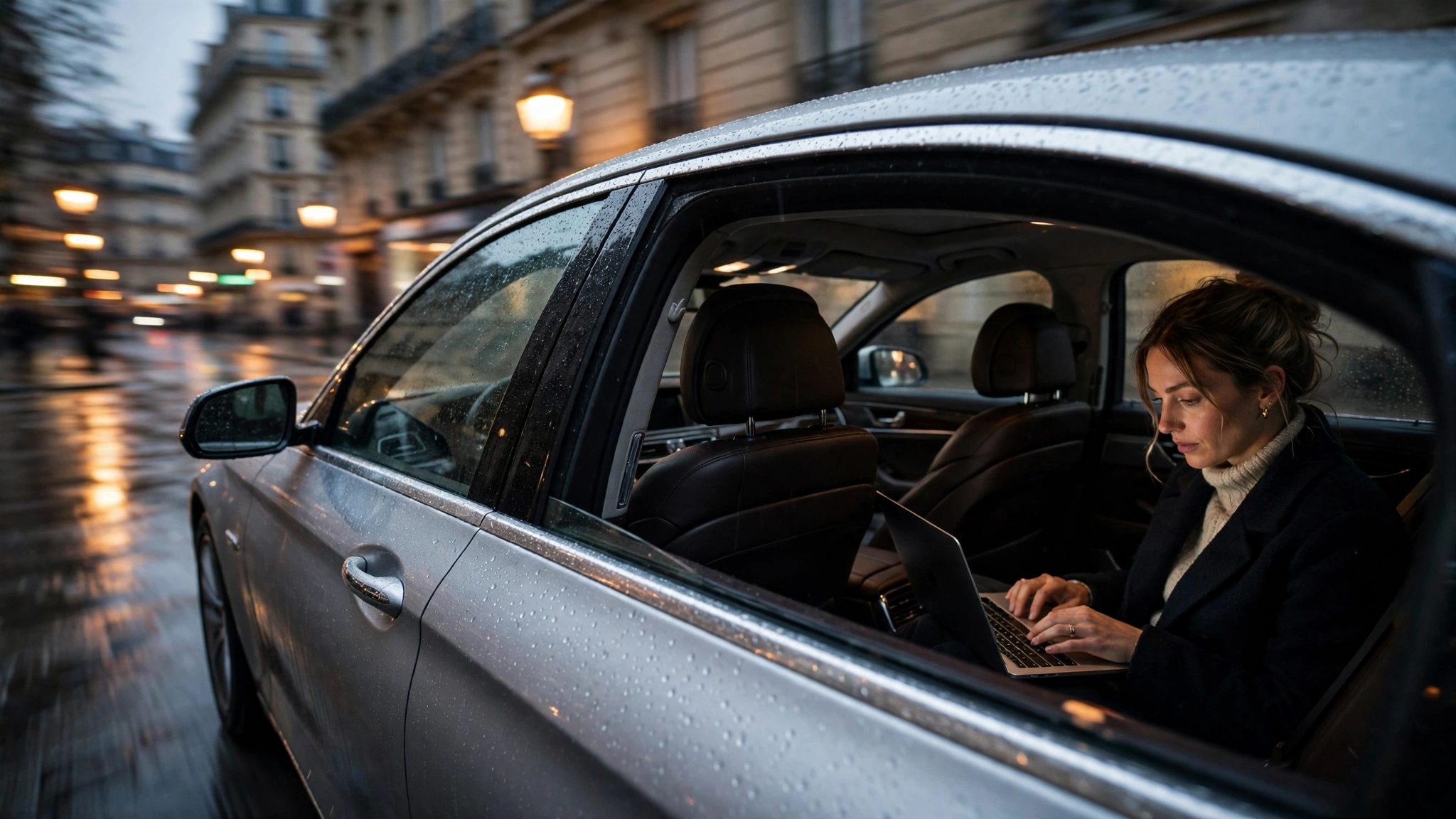
Every great chauffeur shares the same qualities. Calm hands. Good judgement. Silence when you want to work. Mercedes-Benz has spent a century selling that experience with a person behind the wheel. On October 16, Mercedes and NVIDIA expanded their partnership to build the version where the chauffeur is software – and the car at the centre of it is the S-Class, reimagined as a robolimousine.
The division of labour is elegant. Mercedes brings the car itself: the engineering, the safety record and MB.OS, its operating system, which lets new driving functions arrive through over-the-air updates. NVIDIA brings the intelligence. Hyperion is the in-vehicle computing and sensor architecture. Alpamayo is the full-stack driving software, built around AI reasoning and covering point-to-point urban assistance, active safety and automated parking. Halos sits on top as the safety layer, with a parallel safety stack that adds redundancy and guardrails.
From a helpful CLA to an L4-ready S-Class
This partnership is already on the road, which is what makes the luxury claim credible. The all-new CLA began rolling out in 2026 with NVIDIA DRIVE AV software, offering Level 2++ assistance in the United States, including point-to-point help in urban driving. The car handles much of the steering, speed and navigation between two addresses while the driver supervises. It is assistance, not autonomy, and it is available now rather than promised for someday.
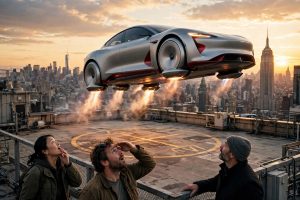
The S-Class aims at a different world. It carries what the companies describe as an L4-ready architecture, built on Hyperion and full-stack DRIVE AV L4 software. Ready is the honest and important word. The hardware and software foundation is in place so the car can support robotaxi-style operation within defined conditions. Reporting on the announcement links that robotaxi direction to collaboration with Uber, which would give a luxury fleet an enormous booking window. Imagine ordering a car and having an S-Class arrive – not a converted economy model, but the limousine flagship itself, driving itself.
The appetite for that kind of machine is already proven at the top of the market, where buyers happily commit serious money for rare personal transport, as shown by the quarter-million reservation that bought the ultimate luxury toy. A robolimousine is the grown-up version of the same instinct: exclusivity measured not in horsepower, but in privacy, time and arrival.
A second brain whose only job is caution
The detail that should matter most to wealthy buyers is Halos. Alongside the main driving stack sits a parallel safety stack – a second system watching the first, with its own guardrails. If the AI planner proposes something outside the safe envelope, the safety layer can intervene. Think of it as a co-pilot who never tires, never glances at a phone and has no ego about being overruled.
That architecture is how a conservative, trust-rich brand makes peace with ambitious software. Jorg Burzer, Mercedes-Benz board member and chief technology officer for development and procurement, called NVIDIA the company’s most important strategic partner in automated driving, pointing to the urban point-to-point system the two built together, which Mercedes describes as the first of its kind for the western world. NVIDIA automotive vice president Ali Kani framed the other half: accelerated computing that gives vehicles the intelligence to understand the world and reason through complex situations, with full-stack safety.
There is a wider pattern here that affluent technology buyers will recognise. The winners in premium AI are increasingly the platforms that pair powerful models with verifiable guardrails, much like the bespoke enterprise AI services now attracting serious backing. In a limousine, the guardrail is not a feature list item. It is the whole reason you can close your eyes.
What chauffeured travel becomes
For owners, the near-term reward is quieter than the Level 4 headline. A car that improves through software updates is a different ownership proposition from a car frozen on delivery day. Your CLA handles more of an urban trip next year than it does today. Your S-Class gains capability while it sits in your garage. Luxury has always meant a product that ages gracefully. Software, handled well, lets it actually get better.
For cities and hotels, the use case is practical as well as glamorous. Premium chauffeured travel is a real market in every major city: airport runs at dawn, executive transfers, wedding fleets, hotel house cars. A Level 4 version of that service, running a car designed from the start for the job, could set the standard that mass-market robotaxis later follow – just as business aviation set service standards that commercial airlines eventually adopted.
For investors, honesty matters: no launch date and no financial terms were announced. This is a platform commitment, not a product launch. Its value will appear over years, in software attach rates, in robotaxi partnerships and in whether Mercedes keeps its technology premium as driving shifts from a skill to a service.
That shift is the real story. If the steering wheel slowly becomes optional, two things decide why a buyer chooses one car over another: the badge on the grille and the intelligence behind the dashboard. Mercedes owns the first as few brands ever have. With NVIDIA, it is making a serious, carefully guarded bid to own the second as well. The robolimousine is not the end of the chauffeur. It is the chauffeur, perfected into software, arriving in the one car wealthy passengers already trust most.








Be First to Comment