
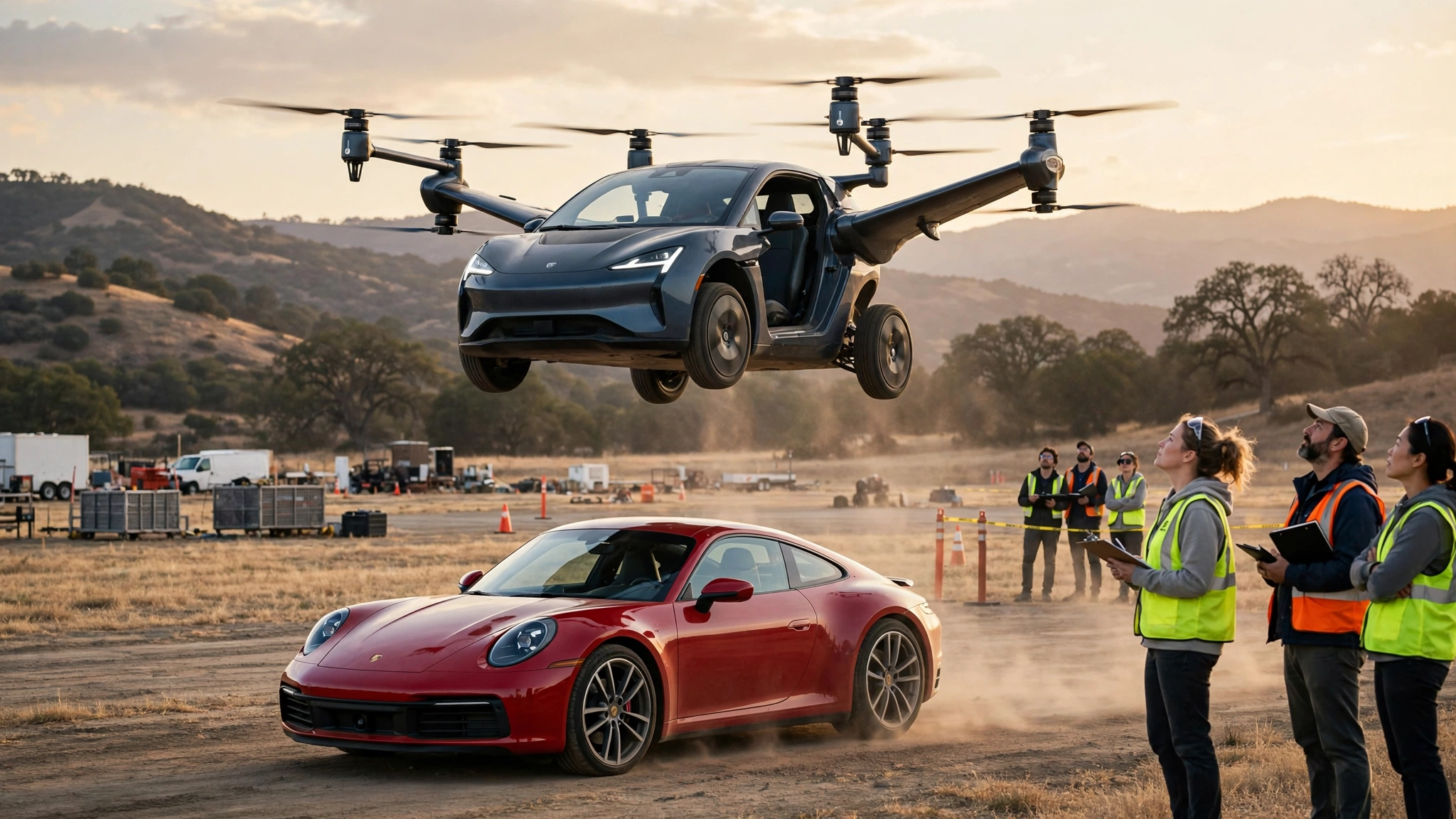
Every luxury category starts the same way. First it is a toy for people who can afford to be early. Then it gets a history, a rivalry and a waiting-list culture, and suddenly ownership itself becomes the story. The personal flying car took a step into that world on October 15, when California startup Alef Aeronautics marked what it described as its 1,000th logged flight – by flying over a Tesla Roadster.
The theatre was deliberate, and rather good. Alef released video of its flying car lifting off vertically and passing over a parked Tesla Roadster and a Cybertruck. The same day, Tesla had shown its own Roadster becoming airborne at a demonstration in Texas. Two companies, one date, and a new category arguing in public about who got there first.
Alef chief executive Jim Dukhovny leaned into it. Welcome Tesla to the flying car race, he said – we have been here alone for eleven years. Coverage spread across US television affiliates and international outlets within 48 hours. For a small company, that kind of attention is not vanity. It is how a niche product becomes something collectors and early buyers start to talk about at dinner.
One thousand flights is a provenance story
Luxury buyers understand provenance. A watch with a service history. A car with a documented past. Alef is building the aircraft version of that paper trail – 1,000 logged flights accumulated across its Model A and Model Zero demonstrator programs, flight by flight, landing by landing, check by check.
Set that against the Texas demonstration. Tesla showed its two-seat Roadster at a SpaceX facility near Waco, driving up a ramp, becoming airborne, performing a flip and landing nearby. Reports describe the lift as coming from a compressed-air or cold-gas system rather than rocket fuel, and Tesla quoted a 0 to 60 mph time of 0.81 seconds for the car. As a single moment, it was spectacular. As a record, it is a different kind of claim from a thousand logged flights.
Neither moment puts a flying car in a private garage tomorrow, and honest coverage should keep that in view. Alef has previously reported a limited FAA special airworthiness certificate for an earlier phase of its program, issued in 2023 for exhibition, research and development purposes. That is a real step and a narrow one. It is not full type certification, and it does not authorise carrying passengers for hire. Tesla’s demonstration has not been confirmed as flying under full FAA aircraft certification either. The gap between demonstration and certified ownership product is where the next years of work live.
Owning the aircraft, not booking the seat
Here is the distinction that makes this a luxury story rather than just an aviation one. The air taxi services now working through preparation in Dubai and Abu Dhabi sell rides. You book a seat, you fly, you leave. Alef aims at the opposite model: a vehicle you own, street-legal on the road, able to take off and hop over congestion in the air.
That is the logic of the supercar and the private aircraft combined. Ownership brings the rituals wealthy buyers enjoy – specification, delivery, storage, maintenance, the quiet pleasure of access on your own schedule. It also brings the responsibilities, and regulators will shape how much of that freedom is real in practice. But as a category idea, it is potent. Our coverage of Dubai and Abu Dhabi racing to sell the first premium air taxi seat covers the booked-seat future. Alef is pitching the owned-vehicle future alongside it.
Dukhovny, to his credit, argues that Tesla helps rather than hurts that pitch. He told reporters that Tesla’s arrival proves the market, establishes a separate flying car category, creates an industry that can argue for specific regulations, brings investor focus, helps the public compare technologies, and creates a benchmark to measure against. He is right about how categories grow. Rivalry creates conversation, conversation creates demand, and demand gives regulators and suppliers a reason to move faster. The same premium driverless contest is now visible on the road, where Mercedes and NVIDIA are reimagining chauffeured travel with the robolimousine – different vehicles, same lesson about status following whoever defines a new way to travel.
What a serious early buyer should actually track
Forget the rivalry posts for a moment. Three things will decide whether the personal flying car becomes a genuine purchase category or stays a wonderful video.
First, certification. Any move from limited approvals toward a fuller airworthiness pathway, by either company, matters more than another demonstration. Second, flight cadence. Alef has now set a public baseline at 1,000 flights. Whether that count keeps climbing at pace is a health check anyone can follow. Third, production signals – tooling, facilities and customer-unit build activity. That unglamorous evidence is what separates a demonstrator from a product someone can actually take delivery of.
One point needs to be made clearly, because speculation fills gaps quickly in this market: no confirmed price for Alef’s car is given in the verified reporting behind this story, so none is quoted here. In a category this young, an invented number would mislead exactly the readers most likely to act on it. When a confirmed figure is published, it will be news on its own.
The appeal, stated plainly
Why would anyone want one? The practical answer is time and flexibility – drive normally, then lift over a jammed stretch rather than sitting in it. The emotional answer is older and simpler. Flight, on demand, from a vehicle that lives in your world rather than at an airport, is one of the last great ownership fantasies. Cars promised freedom a century ago. A roadable aircraft promises it again, vertically.
October 15 gave that fantasy both of the ingredients it needs. Tesla supplied the spectacle. Alef supplied the record book. Luxury categories are built on exactly that pairing – a moment everyone talks about, and a history that makes the object feel real enough to want. The certified, buyable version is still being earned flight by flight. But for the first time, the personal flying car looks less like a cartoon and more like the next thing serious collectors will ask their advisers about.













Be First to Comment