
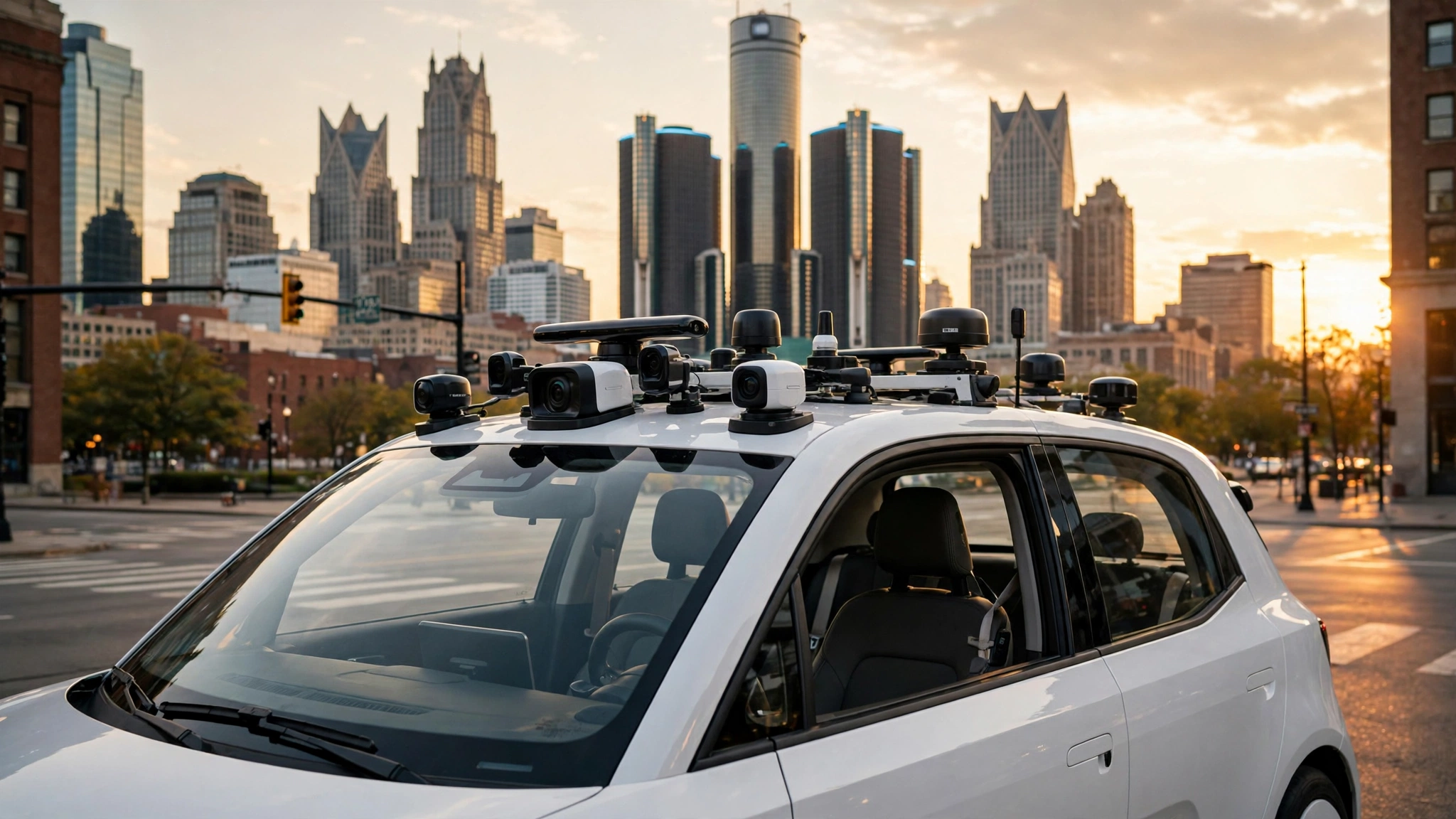
The first driverless rides in Detroit aren’t carrying paying customers. That’s exactly what makes them the milestone they are. Waymo confirmed to the Detroit Free Press on October 6 that its vehicles are now operating fully autonomously in Detroit, with nobody in the driver’s seat at all, and the only passengers so far are the company’s own employees.
Employee rides sound modest until you remember what came right before. Less than a month ago, Waymo’s cars in Detroit still had trained specialists behind the wheel. The step from supervised testing to truly driverless operation is the one this industry treats with the most respect. It means Waymo is willing to let its cars, and its reputation, face Detroit traffic with no human backup.
How Detroit earned the no-driver milestone
Waymo announced the Detroit expansion last year and followed its usual routine: months of mapping, supervised test miles, coordination with local officials and community engagement before the driver came out. Spokesman Chris Bonelli told the Free Press that those months were spent getting the Waymo Driver properly acquainted with the city before making the move.
Completing that work in under a month from supervised to driverless is fast for this company, which is known for patience. It suggests the preparation was thorough enough that the final call was a formality rather than a gamble. You don’t take the driver out early unless the data has been telling you for weeks that you can.
The map so far
Right now the service area covers downtown, Corktown, Midtown, Hamtramck and Indian Village, with plans to keep growing across the metro area. The geography reads like a stress test in miniature: the dense downtown core, the university and hospital corridor in Midtown, and real residential streets in Hamtramck and Indian Village, potholes and all.
It’s the same playbook Waymo ran in San Francisco, Los Angeles, Austin and Phoenix, cities where commercial service now runs after the company launched its first robotaxi service back in 2020. Announce early, drive supervised miles, talk to the city, talk to the neighbors, then remove the driver. Slow by design. That caution is the product.
The Motor City angle
Detroit built the modern car business: the assembly line, the suburbs, the idea of an entire metropolis organized around the automobile. Now it gets the version where the car arrives on its own, drives itself, and never needs a parking spot. The symbolism writes itself, and Waymo didn’t have to invent any of it.
Whether Detroiters embrace robotaxis the way Phoenix and Austin did is an open question, and the answer will arrive in January. Lake-effect weather, salt-crusted sensors and lane markings buried under slush are the exam other cities simply don’t offer. Running employee-only rides through a Detroit winter is exactly how you study for it: hundreds of in-house trips in real conditions before a single paying customer climbs in.
The safety math behind the call
Waymo’s confidence rests on mileage, not marketing. The company has logged more than 270 million fully autonomous miles, and its data shows 95 percent fewer crashes causing serious or fatal injury than human drivers. That number is what regulators in each new city ask about first, and it’s why the approvals keep coming.
It also explains the speed. Once you have hundreds of millions of driverless miles elsewhere, a new city is mostly local knowledge: where the potholes hide, how snow redraws the lane markings, which intersections get strange at rush hour. Months of supervised driving collected all of it. Taking the driver out was just the signature at the bottom of the homework.
Detroit’s robotaxis are still an employee perk for now. But the trajectory is familiar, and it has only ever pointed in one direction: public rides. Driverless service also began in Zagreb this month, and the industry’s expansion map keeps filling in. The Motor City spent a century perfecting the driver. Its next act may be perfecting the absence of one.



















Be First to Comment