
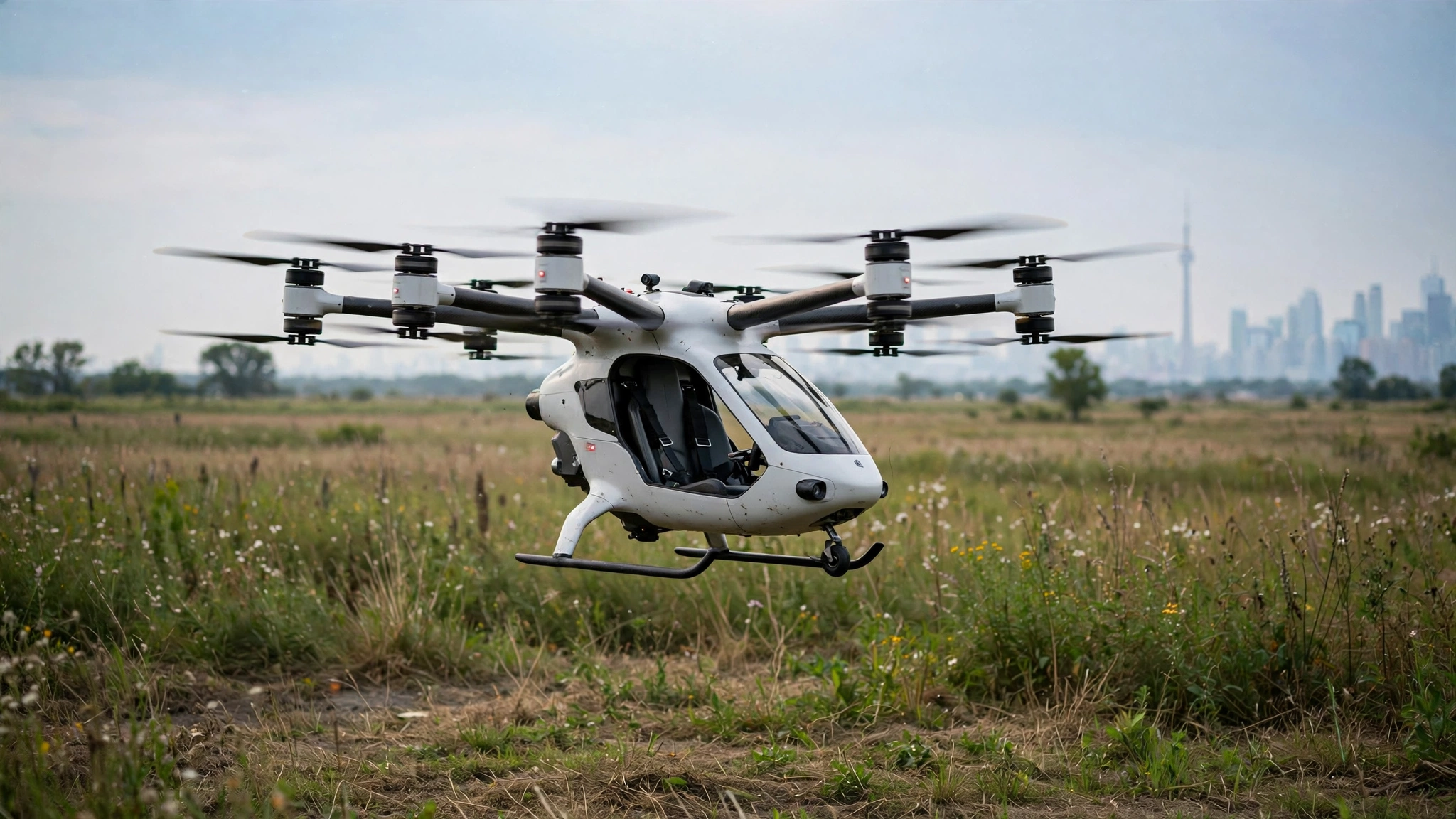
Every air-taxi company has a coming-of-age moment: the day the prototype leaves the hangar untethered and flies outside in real weather. For Toronto-based Mostavio, that day has arrived. The startup has received a special flight operations certificate from Transport Canada, clearing its MX1 single-seat multicopter eVTOL prototype for outdoor, untethered flight testing.
The qualifiers deserve a second look, because they carry the whole story. Outdoor means not in a test chamber. Untethered means no safety line. Flight testing means the aircraft will be up in the sky, over Canada, on its own. For a company most of the world had never heard of until now, that is a striking amount of official confidence.
Mostavio’s roadmap is easy to follow. The MX1 is the single-seat prototype, the learning machine. The destination is a two- to three-passenger eVTOL air taxi. One seat now, two or three later. Walk before you run.
A certificate that actually means something
A special flight operations certificate from Transport Canada is not a rubber stamp. It means the regulator reviewed the aircraft, the test plan and the safety case, and decided these flights can proceed without endangering anyone on the ground. For an early-stage multicopter, that permission is the hardest one to get. In some ways it’s harder to earn than the aircraft was to build.
It also changes Canada’s position in the air-taxi story. The country’s eVTOL scene has been quiet next to the noise coming out of the United States, Germany and China. A Toronto startup flying an untethered prototype under a Transport Canada certificate is Canada’s understated entry into a race everyone else is running loudly.
Small, simple, deliberate
The MX1 is a multicopter: many rotors, no wings, designed for short hops rather than long cruises. That is a deliberate trade. Multicopters are mechanically simple, which makes them cheaper to build and easier to certify for early operations. This aircraft will not fly from Toronto to Montreal. One day it might fly across a city, and the first job is simpler still: prove it can fly outdoors, on its own, at all.
The contrast with the industry’s heavyweights is instructive. The big names are running demonstration campaigns with winged tilt-rotors designed for regional routes. Mostavio is doing something smaller and earlier: one seat, short hops, Canadian certification. Different stage, different strategy, same destination.
No aircraft specs have been verified for the MX1, and that’s fine at this stage. Right now the only spec that matters is that it flew. Range, speed and payload come later. Today the achievement is the certificate and the sky.
The Toronto factor
Toronto is a better place to build an air-taxi company than it gets credit for. It has a deep aerospace talent pool, a major international airport, an island airport minutes from downtown, and a waterfront that practically invites demonstration routes. Canadian certification also travels well internationally; Transport Canada’s safety reputation means a certificate from Ottawa gets read carefully in other capitals.
There’s a pattern worth noticing here. The loudest eVTOL stories come from California, Germany and China. But the companies that survive certification tend to be the ones that picked a regulator, did the homework and flew when told. Mostavio just did the flying part.
The long ladder ahead
The special flight operations certificate is step one on a long ladder. Next come expanded flight envelopes, then demonstrations with observers, then the slow grind toward a type certificate that allows commercial operations. Every rung demands the same ingredients: logged hours, documented safety, and a regulator willing to keep saying yes.
Mostavio’s advantage is focus. A single-seat multicopter has fewer systems to certify than a winged tilt-rotor, and Transport Canada has shown it will work with startups that bring serious engineering. A two- to three-passenger air taxi is ambitious but conventional by eVTOL standards. If the MX1 flies well, everything that follows has a template.
Most eVTOL startups spend years in tethered or indoor testing before a regulator signs off on free flight. Mostavio skipped the long purgatory. That says as much about the preparation as it does about the aircraft.
The air-taxi race has a quiet new competitor, and it just earned the right to fly outside. Watch Toronto.


















Be First to Comment