
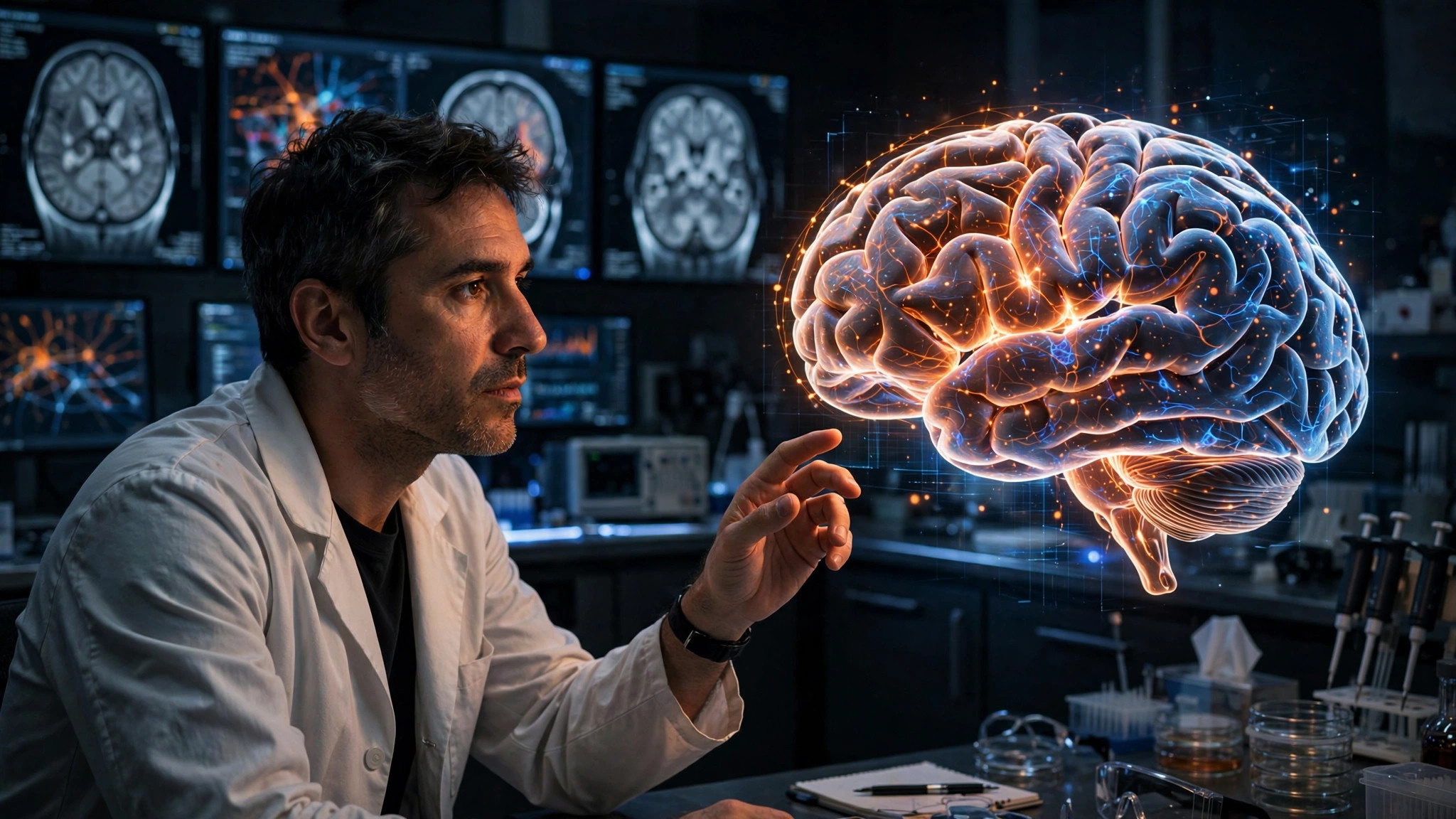
Picture an atlas that keeps redrawing itself. Every new patient adds detail, every recording sharpens the map. This week, that atlas arrived.
On October 8, Precision Neuroscience announced a manuscript posted on the bioRxiv preprint server describing a growing atlas of the human central nervous system. It is built from high-resolution surface electrophysiology recordings taken in 70 patients across twelve academic medical centers. The dataset already holds more than 100,000 electrode deployments, individual recording sites capturing the electrical chatter of living neural tissue at a resolution that was simply out of reach a few years ago.
Why this map is different
Two things set it apart. The first is scale. One hundred thousand-plus electrode placements across 70 patients is unusually rich, spanning the primary motor and somatosensory cortex, language and speech regions, and the auditory cortex.
The second is territory. For the first time in a high-density surface electrophysiology dataset, the recordings reach into the brainstem and spinal cord. These are the body’s trunk highways for movement, breathing, and sensation, and the places where the most devastating injuries happen. Charting them at this fidelity is like mapping a coastline that sailors previously had to navigate blind.
And the map is designed to keep growing. Every new patient enrolled in the company’s ongoing clinical studies adds recordings through the same standardized technology. Since the manuscript data were collected, the implanted-patient count has already passed 100. The atlas is getting denser by the month.
The reason for the cartography
This is not mapping for its own sake. Precision Neuroscience is developing an implantable brain-computer interface meant to restore function for people living with paralysis from spinal cord injury and stroke, and neurodegenerative diseases like ALS.
The principle is straightforward. Brain-computer interfaces listen to neural signals and translate them into commands: a cursor, a prosthetic limb, a speech synthesizer. The quality of that translation depends entirely on how well we understand the language the brain is speaking. An atlas built from hundreds of thousands of real recordings, standardized across patients and centers, is a Rosetta Stone for neural decoding. The company frames it as a step toward a “whole-brain interface,” a systematically growing, multi-subject, multi-region resource that in aggregate achieves something close to whole-brain coverage.
The honest fine print
An atlas is infrastructure, not a therapy. Nobody walked out of a hospital with restored movement because a manuscript landed on bioRxiv. The road from better neural maps to better implants runs through years of clinical trials, regulatory review, and incremental engineering, and the company is clear that a permanent implant is a destination, not a milestone.
But infrastructure is where medical revolutions quietly begin. Before the Human Genome Project, precision oncology was a phrase, not a practice. The genome reference gave every later discovery a coordinate system. This atlas aims to be the coordinate system for the nervous system.
One more thing worth celebrating: the manuscript is public, posted openly for anyone to read. Open science means labs on other continents are already studying it, which is how a single company’s clinical program becomes the field’s shared infrastructure. The best maps are the ones everyone can use.






















Be First to Comment